
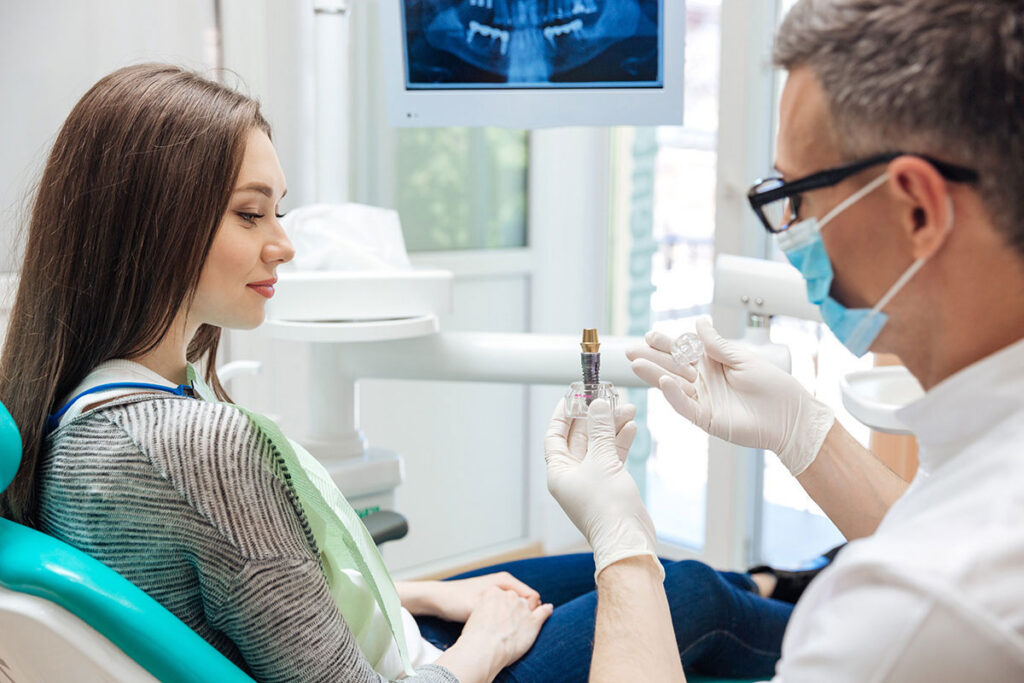
Do you have a dental implant post but still need the replacement tooth that goes on top? Maybe your implant was placed months ago and you are ready to finish treatment, or perhaps the crown on an older implant has come loose, chipped, or fallen off. These situations can be confusing because people often think of a dental implant as one piece. In reality, a single-tooth dental implant usually includes several components that work together to replace the missing tooth.
If you have been searching for phrases like “need a tooth put on my implant,” “replacement tooth for implant post,” or “finish my dental implant,” the good news is that having an implant post already in place may mean an important part of the process has been completed. The next step is determining the condition of the implant, the connector, and the restoration that will become the visible replacement tooth.
What Goes on Top of a Dental Implant?
A dental implant placed in the jaw acts as a replacement for a natural tooth root. However, the implant post itself is usually not the part you see when you smile. A completed single-tooth dental implant generally includes the implant in the bone, a connecting component called an abutment, and a dental crown that replaces the visible part of the tooth.
That is why someone can have an implant post without a crown. The implant may have been placed and allowed to heal before the final restoration was made. In other situations, treatment may have been interrupted because of a move, change in insurance, scheduling issue, or another reason.
If your implant has healed but does not yet have a final tooth, a dentist can evaluate the implant and determine what is needed to complete the restoration.
I Have an Implant Post Without a Crown, What Should I Do?
If you have an implant post without a crown, schedule an evaluation rather than assuming a crown can simply be attached immediately. The dentist first needs to identify the type of implant, check the surrounding gum tissue, evaluate the stability of the implant, and determine whether the implant is ready to support a permanent restoration.
Dental X-rays or other imaging may be used to evaluate the bone around the implant. The dentist may also need information about when and where the implant was placed. If you have records from the dentist or specialist who placed it, bringing those records can sometimes help identify the implant system and components.
Once the implant is confirmed to be healthy and restorative components are available, the dentist can plan the replacement tooth. Digital scanning or impressions may be used to record the implant position, surrounding teeth, and bite.
The goal is not simply to place something white over the implant. The final implant crown should fit the available space, meet the opposing teeth appropriately, and create contours that allow the area to be cleaned.
Can Another Dentist Finish My Dental Implant?
Patients sometimes begin implant treatment at one office and need to complete it somewhere else. This can happen after moving to Houston, changing dental providers, or experiencing a long gap in treatment.
Another dentist may be able to finish a dental implant after evaluating the existing work. However, implant systems use specific parts, sizes, and connections. Therefore, identifying the implant manufacturer and model can be important before the correct restorative components are ordered.
If records are available, they may contain this information. If records are not available, the dentist may use X-rays, clinical examination, or other methods to help identify the implant.
The dentist will also determine whether the implant has healed properly and whether anything needs attention before the final crown is made.
What if My Dental Implant Crown Fell Off?
A search for “crown fell off dental implant” can describe several different situations. Sometimes the crown itself has separated from its attachment. In other cases, the crown and abutment may come out together. A screw inside the restoration may also have loosened.
Do not try to glue the crown back onto the implant at home. Household adhesives are not designed for dental use and can damage components or make professional treatment more difficult.
Instead, save any piece that came out and contact a dentist. Avoid chewing directly on the implant area until it has been evaluated.
If the crown and components are undamaged, it may sometimes be possible to clean, assess, and reattach them. However, a damaged crown, worn screw, fractured component, or poor fit may require replacement.
Why Does My Implant Tooth Feel Loose?
An implant tooth that feels loose should be evaluated promptly, but it does not always mean the implant in the bone is failing.
Several components make up an implant restoration. For example, the crown can loosen from the abutment, or the screw connecting components can become loose. These problems are different from movement of the implant itself.
If only the restoration is loose, the dentist may be able to repair or replace the affected component while the implant remains in place. However, if the implant itself is moving within the jaw, the situation requires a different evaluation.
A dentist may check the bite, restoration, implant stability, surrounding gum tissue, and bone levels to identify the source of movement.
Until the problem is evaluated, avoid repeatedly pushing or wiggling the implant tooth with your fingers or tongue. Continued movement can place additional stress on loose components.
What if the Tooth on My Dental Implant Is Broken?
A broken tooth on a dental implant usually means the visible restoration has chipped or fractured. Implant crowns are designed to withstand normal chewing, but restorative materials can still be damaged by strong bite forces, grinding, accidents, or biting hard objects.
The repair depends on how much of the crown is damaged. A minor chip may have different treatment options than a restoration that has split or fractured extensively.
Because the crown sits on an implant, the dentist also evaluates the underlying components before replacing the visible tooth. This is especially important when a break may have been caused by excessive biting pressure.
If the crown is replaced without addressing an unfavorable bite or grinding habit, the new restoration could be exposed to the same forces.
Can You Replace an Implant Crown Without Replacing the Implant?
Yes, in many situations an implant crown can be replaced while the implant post remains in the jaw. The implant and crown are separate components, which means damage to the visible tooth does not automatically mean the entire dental implant needs to be removed.
A patient may need to replace an implant crown because it is fractured, worn, loose, no longer fits properly, or no longer matches the surrounding teeth as desired.
The dentist first confirms that the implant itself is stable and healthy. Next, the existing restoration is assessed to determine how it is attached and whether the abutment can be reused.
A new scan or impression may then be taken so a replacement implant crown can be designed.
Screw-Retained and Cement-Retained Implant Crowns
Implant crowns can be attached in different ways. Some are screw-retained, which means a screw connects the restoration to the implant and the access opening is covered with tooth-colored material.
Other crowns are cemented onto an implant abutment. Each design has clinical considerations, and the dentist determines which approach is appropriate based on implant position, available space, bite, appearance, and other factors.
If a crown becomes loose, knowing how it is retained helps determine the repair process. This is another reason it is better to have a dentist evaluate a loose implant tooth rather than attempting to reposition it yourself.
Benefits of Dental Implants
When an implant is healthy and properly restored, dental implants can provide several advantages for replacing missing teeth.
- Independent tooth replacement: A single dental implant can replace a missing tooth without requiring healthy neighboring teeth to support the restoration.
- Stable foundation: The implant sits within the jawbone and supports the replacement tooth from below the gumline.
- Replaceable restoration: If an implant crown becomes damaged years later, the crown may often be serviced or replaced without removing a healthy implant.
- Natural appearance: A custom implant crown can be designed to coordinate with nearby teeth in shape and shade.
- Chewing function: A completed dental implant helps restore contact in an area where a tooth is missing.
- Versatile treatment: Dental implants can support crowns, bridges, and larger tooth replacement restorations.
- Long-term maintenance options: Implant restorations can be monitored, repaired, adjusted, or replaced as needs change over time.
What Happens When You Finish a Dental Implant?
If your implant is healed and ready for restoration, the process generally begins with an examination. The dentist checks the implant area, surrounding gums, nearby teeth, and bite.
A digital scan or impression may then be taken to record the implant position and create the final restoration. Depending on the implant system, a scan body or another component may be temporarily connected during this step.
The replacement tooth is then designed to fit the implant and surrounding smile. When the crown is ready, the dentist checks its fit, contacts, appearance, and bite before final attachment.
Once completed, you should receive instructions for cleaning around the dental implant. Even though the crown itself cannot develop a cavity like natural enamel, the gum tissue around the implant still requires daily plaque removal.
How Do I Care for a Finished Dental Implant?
Brush around the implant crown every day and clean between the implant and neighboring teeth. Depending on the restoration, floss, interdental brushes, or another cleaning tool may be recommended.
Routine dental visits allow the dentist to monitor the implant crown, surrounding gums, bone, bite, and other teeth. If you grind your teeth, a protective nightguard may also be discussed.
Most importantly, do not ignore a change in the way the implant feels. Clicking, movement, discomfort while chewing, or a change in the bite can be reasons to schedule an evaluation.
Frequently Asked Questions About Finishing or Repairing Dental Implants
I already have an implant post. Can a dentist just add the tooth?
Possibly. The implant first needs to be evaluated for stability, healing, compatibility, and the correct restorative components. If everything is healthy and ready, a custom implant crown can then be planned.
What should I do if my dental implant crown fell off?
Save the crown or any components that came out, avoid chewing on the area, and contact a dentist. Do not use household glue to reattach the restoration.
Why does my implant tooth feel loose?
The crown, abutment, or connecting screw may be loose, or less commonly the implant itself may be moving. A dental examination is needed to identify which component is causing the problem.
Can an old implant crown be replaced?
Yes, many implant crowns can be replaced while a healthy implant remains in place. The dentist will evaluate the implant and determine which restorative components are needed.
Can a broken tooth on a dental implant be repaired?
Sometimes. A small chip may have different options than a major fracture. If the crown cannot be predictably repaired, a replacement implant crown may be recommended.
Ready to Complete or Repair Your Implant Tooth?
If you have been searching for someone to “finish my dental implant,” replace a crown on an implant post, or evaluate an implant tooth that feels loose, the first step is determining exactly which component needs attention. In many cases, an implant that is healthy in the jaw can continue serving as the foundation for a repaired or replacement restoration.
Contact MB Dental at Heights at (281) 857-6404 or Contact Us to Schedule a Consultation for dental implant restoration or repair at 1111 Studewood St Suite C, Houston, TX 77008.