Dental implants are not all the same size, and in selected cases a smaller implant can play a useful role in restoring missing teeth or stabilizing a removable prosthesis. Mini dental implants are narrower than many conventional implants and may be considered when anatomy, available bone, restoration design, or treatment goals make a smaller implant appropriate.
At MB Dental at Heights, mini dental implants are among the implant options described for patients who may need help securing dentures or partials, replacing certain smaller teeth, or exploring a less extensive implant approach. Even so, mini dental implants are not simply a smaller version that works in every situation. Careful evaluation is needed to determine whether their dimensions and intended use can provide the support required for a particular restoration.
What Are Mini Dental Implants?
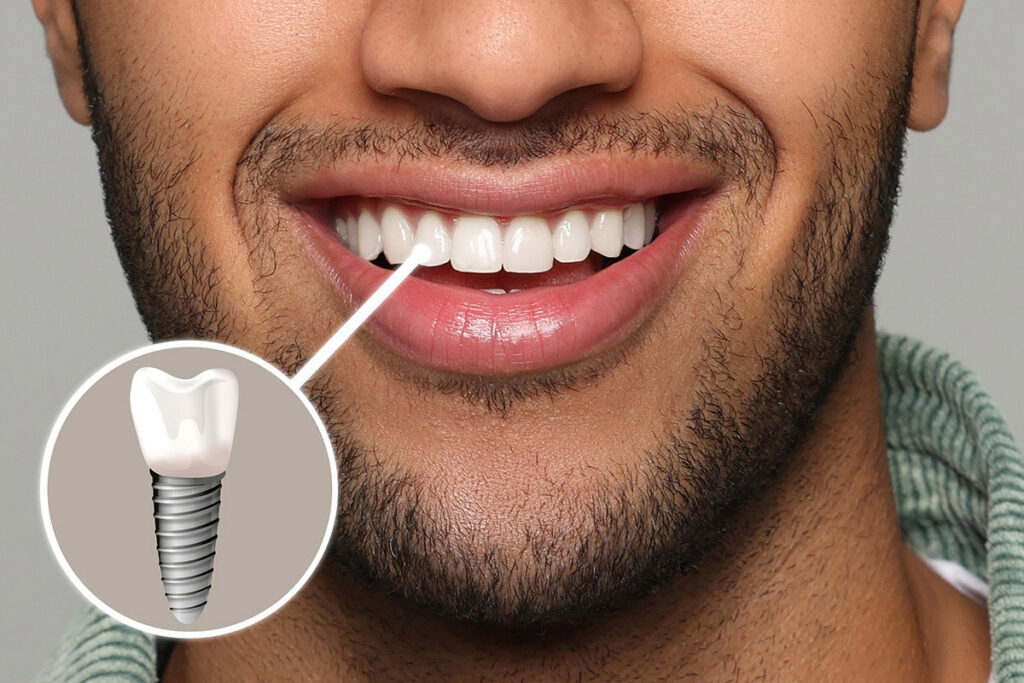
Mini dental implants are small-diameter implant posts placed into the jawbone to provide support for selected dental restorations. Like conventional implants, they are intended to create an anchor within the bone. However, their narrower design can affect where they are used, how they are placed, and what types of forces they are expected to manage.
Mini implants are commonly associated with denture stabilization, particularly when a removable denture needs more retention. They may also be considered in certain spaces where a standard-size implant is not the ideal fit.
The word mini can make the procedure sound universally simpler, but size alone does not determine whether treatment is appropriate. The dentist still needs to evaluate bone, gum tissue, bite forces, available space, health history, and the type of restoration that will be supported.
How Are Mini Dental Implants Different From Traditional Dental Implants?
The most obvious difference is diameter. Mini dental implants are generally narrower than conventional dental implants. That smaller size can influence both the surgical approach and restorative options.
Traditional implants are available in many sizes and designs and are commonly used for single crowns, implant bridges, implant-supported dentures, and full-arch restorations. Mini dental implants are often used in more specific situations, such as helping retain a removable denture or addressing a limited space.
In selected cases, a narrower implant may require less bone width than a conventional implant. This can be helpful when the ridge is narrow and the patient is being evaluated for a suitable restorative application. However, reduced bone volume does not automatically make mini implants the correct choice. Sometimes bone grafting, a standard implant, or another restorative solution provides a better long-term plan.
The decision should be based on the forces the implant will need to handle and the restoration it will support, not only on convenience or implant size.
What Are Mini Dental Implants Commonly Used For?
Mini dental implants can serve several purposes depending on the patient’s anatomy and restorative needs.
Denture Stabilization
One of the most common uses is helping stabilize a removable denture. Attachments within the denture connect to the implants, helping the prosthesis resist unwanted movement. For patients who struggle with a loose lower denture, additional retention may make speaking and chewing feel more predictable.
Support for Partial Dentures
In certain cases, mini implants may also help support or retain a removable partial denture. The exact approach depends on the number and location of missing teeth, the remaining natural teeth, and the design of the partial.
Selected Small Tooth Spaces
Some narrow spaces, particularly where teeth are naturally smaller, may be considered for a mini implant. However, the available bone, spacing between roots, bite forces, and restorative dimensions all need to be evaluated before using a narrow implant for a tooth replacement.
Because mini dental implants have specific indications, treatment planning is especially important. What works well for denture retention may not be the right design for replacing a molar that receives heavy chewing forces.
Who May Be a Candidate for Mini Dental Implants?
Potential candidates include patients who need additional denture stability, people with selected narrow tooth spaces, or those whose jaw anatomy may support a smaller implant design for an appropriate restoration.
The dentist also reviews medical history, gum condition, oral hygiene, smoking or tobacco exposure, medications, and conditions that could affect healing. Bone quality matters in addition to bone quantity because the implant needs sufficient support within the jaw.
Patients who have been told they have limited bone may want to ask whether mini dental implants are appropriate, but they should not assume a smaller implant will automatically eliminate the need for grafting or other preparation. The answer depends on where bone is lacking and how the final restoration needs to function.
How Is a Mini Dental Implant Planned?
Planning begins with a dental examination and appropriate imaging. The dentist evaluates the width and height of the available bone, the relationship of nearby tooth roots, important anatomical structures, and the space available for the final restoration.
If mini implants are being considered for denture stabilization, the existing denture is also evaluated. The dentist needs to determine whether it has an appropriate fit, tooth position, bite, and space for attachment components. In some cases, an existing denture may be modified, while another patient may need a new prosthesis designed around the implant attachments.
For a tooth replacement, planning also includes the expected size and shape of the crown, the way the opposing teeth contact it, and the amount of force the implant will receive.
Digital imaging can help the dentist make these decisions before treatment begins.
What Happens During Mini Dental Implant Placement?
The exact procedure depends on the number and location of implants and the type of restoration. Local anesthesia is commonly used to numb the treatment area.
Because mini implants are narrower, selected cases may use a more conservative placement technique than some conventional implant procedures. However, the experience is still a surgical dental procedure and should be planned with the same attention to anatomy, sterility, healing, and long-term function.
After placement, the dentist provides instructions for keeping the area clean and protecting the implants during early healing. If the implants are being used to retain a denture, the restoration may be adjusted or connected according to the treatment plan.
Patients should follow dietary and hygiene instructions carefully, even when the procedure feels relatively comfortable. Healing tissues and newly placed implants should not be overloaded simply because discomfort is minimal.
Benefits of Mini Dental Implants
When used for the right indication, mini dental implants can offer several practical advantages.
- Smaller diameter: Their narrower design may fit selected areas where available bone width or tooth spacing is limited.
- Denture stabilization: Mini implants can provide attachment points that help a removable denture resist unwanted movement.
- Potentially conservative placement: In appropriate cases, the smaller implant size may allow a less extensive surgical approach.
- Restorative flexibility: Mini implants may be used for denture retention, partial denture support, or selected tooth replacement situations.
- Improved day-to-day denture confidence: Additional retention can help some patients feel more secure when speaking and eating.
- Another option for limited spaces: The narrower profile may be useful when a conventional implant is too large for a carefully selected site.
- Personalized treatment planning: Mini implants expand the range of implant options available when standard approaches do not fit the patient’s anatomy or goals.
Can Mini Dental Implants Help With Loose Dentures?
Yes, denture stabilization is one of the most recognized uses for mini dental implants. A removable denture can be fitted with attachment components that connect to the implants. These attachments help the denture stay in a more predictable position.
This does not turn a removable denture into natural teeth, and the appliance still needs to be removed and cleaned according to instructions. However, increased retention can reduce some of the movement that patients experience with a conventional denture.
It is also important to determine why a denture is loose. Sometimes a denture needs relining, repair, or replacement because the shape of the mouth has changed. Implant treatment may be useful, but the denture itself must still have an appropriate design and fit.
Do Mini Dental Implants Eliminate the Need for Bone Grafting?
Not necessarily. A smaller implant may fit into a narrower ridge in some cases, which can sometimes reduce the need for certain grafting procedures. Still, there must be enough suitable bone to support the implant safely.
Bone deficiencies can occur in width, height, or both. Important nerves, sinus spaces, neighboring roots, and other anatomy also influence implant placement. Therefore, mini dental implants should not be viewed as a universal way to avoid bone grafting.
Imaging and clinical evaluation provide the information needed to determine whether a smaller implant is appropriate or whether another approach offers better support.
Are Mini Dental Implants Strong Enough?
Strength needs to be considered in relation to the job the implant is being asked to perform. A narrow implant used to help retain a denture has a different role from an implant supporting a large molar crown or a long fixed bridge.
For appropriately selected uses, mini dental implants can provide useful support. However, because they have a smaller diameter, the dentist must carefully consider bite forces, implant number, implant position, bone quality, and the type of restoration.
This is why patients should avoid comparing implants only by size. The goal is to match the implant design to the clinical task.
How Do You Care for Mini Dental Implants?
Mini dental implants require consistent oral hygiene. Plaque can collect around the implant where it enters the gum tissue, so daily cleaning is essential.
If the implants retain a removable denture, both the denture and the implant attachments need to be cleaned. A soft toothbrush and other tools recommended by the dental team can help remove plaque around each implant. The denture should be cleaned according to its material and attachment system.
Avoid forcing a denture onto attachments if it suddenly stops seating properly. A worn insert, damaged attachment, or debris may be interfering with the fit. Contact the dental office so the cause can be evaluated.
Routine professional visits allow the team to monitor the gum tissue, bone, attachments, bite, and prosthesis.
Mini Dental Implants Versus Standard Implants for Dentures
Both mini and standard dental implants can be used in treatment plans involving dentures, but the design and indications may differ.
Standard implants generally offer a broader range of restorative possibilities and are used extensively for fixed and removable implant restorations. Mini dental implants may offer an alternative when a narrower implant is appropriate for the available anatomy and intended prosthetic use.
Choosing between them requires balancing implant dimensions, bone, force distribution, number of implants, prosthesis design, maintenance, and long-term goals. A consultation should explain why one implant type is being recommended rather than presenting size as the only difference.
Frequently Asked Questions About Mini Dental Implants
Are mini dental implants the same as regular dental implants?
No. Mini dental implants are narrower and are often used for specific restorative purposes. Conventional implants come in a wider range of sizes and are used for many single-tooth, bridge, denture, and full-arch applications.
Can mini dental implants hold a denture in place?
Yes. Mini implants can be used as attachment points to improve the retention of certain removable dentures when the patient’s anatomy and treatment plan are appropriate.
Can mini dental implants be used if I have bone loss?
Possibly. Their smaller diameter may be useful in selected areas with limited bone width, but sufficient bone is still required. Imaging is needed to determine whether mini implants, grafting, standard implants, or another option is appropriate.
Are mini dental implants removable?
The implants themselves are placed in the jaw and are not designed to be removed by the patient. A denture connected to them may be removable, depending on the restoration design.
Do mini dental implants require special cleaning?
They require careful daily plaque removal around the implant and any attachment components. Your dental team can recommend cleaning tools based on the specific restoration.
Find Out Whether a Smaller Implant Fits Your Treatment Plan
Mini dental implants can be useful in carefully selected situations, particularly when denture retention, limited space, or specific anatomical considerations are part of the treatment plan. The important question is not whether a smaller implant sounds easier, but whether it can provide the right support for the restoration you need.
To learn whether mini dental implants may be appropriate for you, contact MB Dental at Heights at (281) 857-6404 or Contact Us to Schedule a Consultation at 1111 Studewood St Suite C, Houston, TX 77008.